Customer Case Studies
Telemedicine in Neurosurgery
How MUL – CT Is Strengthening Care in Tanzania with CARY Move

19. Nov 2026 | 5 min.

How MUL – CT Is Strengthening Care in Tanzania with CARY Move
19. Nov 2026 | 5 min.
P
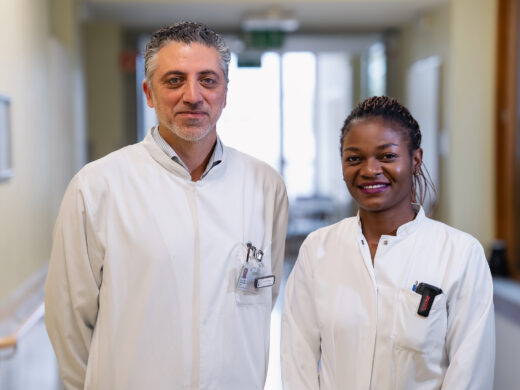
rof Dr Ehab Shiban, Head of Neurosurgery at the Medizinische Universität Lausitz – Carl Thiem (MUL – CT), and junior doctor Dr Maria Kipele share a vision: access to medical care should never depend on geography. For a humanitarian project at Bugando Medical Centre in Tanzania, they rely on CARY Move, avodaq’s teleconsultation solution, which enables complex neurosurgical findings to be assessed and treatments to be planned across hospitals and continents.
In highly specialised neurosurgery, digital connectivity is opening up new ways for clinicians to work together. This applies to hospitals within Germany just as much as to collaboration with Bugando Medical Centre (BMC) in Mwanza, Tanzania, more than 6,000 kilometres away as the crow flies. As part of a teleconsultation project, a team of doctors from MUL – CT in Cottbus supports patient care there. This is made possible by the secure video software Cisco Webex and CARY Move. avodaq donated the teleconsultation trolley to support Prof Dr Shiban’s project and to make specialist expertise available where it previously seemed out of reach.
The problem: neurosurgical care in Tanzania quickly reaches its limits when it comes to treating complex conditions. Because nationwide screening programmes and structured primary care are only available to a limited extent, many people have no access to early diagnosis. As a result, patients often arrive at hospital only at an advanced stage, by which time brain tumours have grown to an enormous size. At the same time, there is a shortage of specialists on site, as well as of the capacity needed for complex surgery and post-operative care.
This is exactly where telemedical support comes in. Without precise visual case planning and coordination across thousands of kilometres, many of these life-threatening conditions would remain inadequately treated. avodaq’s CARY Move solution serves as the link between medical experts in conference rooms in Cottbus and Mwanza. ‘Most of the patients in Tanzania have curable tumours,’ says Prof Dr Shiban, who flies out to the partner hospital on Lake Victoria twice a year. ‘Together, we are helping people who would otherwise have no chance. So this is more than a PR exercise – it’s real medical care.’
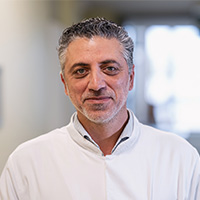
„Together, we are helping people who would otherwise have no chance. So this is more than a PR exercise – it’s real medical care.“
Prof Dr Ehab Shiban, Head of the Department of Neurosurgery, Medizinische Universität Lausitz – Carl Thiem
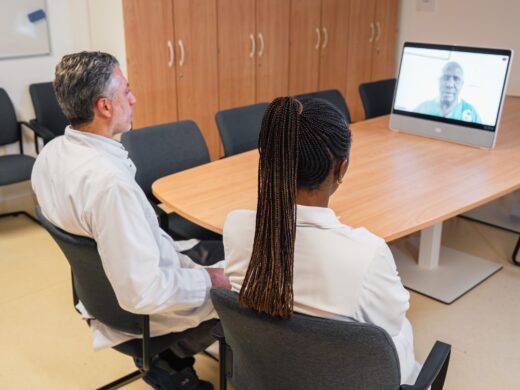
High-definition video and live digital connections via the solution allow case conferences, surgical planning and follow-up care to take place directly and in real time across borders. Specialists in Africa and Europe can discuss X-ray or MRI images in detail ahead of surgery and, once the procedure has been successfully completed, closely monitor the patient’s recovery. This smooth flow of information ensures that post-operative treatment plans are followed and that any complications are detected early. ‘We have to focus our resources where we can achieve the highest success rate,’ explains Prof Dr Shiban. ‘Our aim is to achieve lasting cures for our patients so that we can provide effective help under these conditions.’
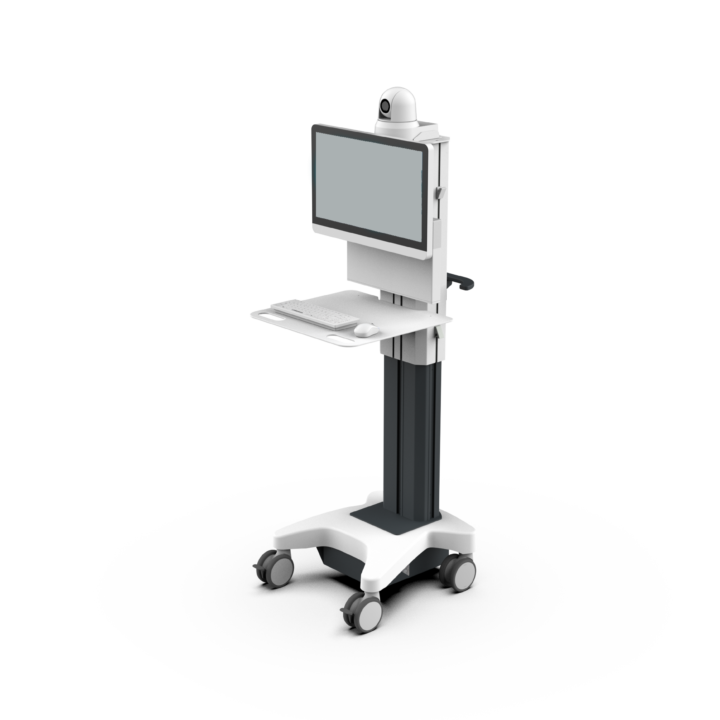
The telemedical collaboration is built on CARY Move, an intuitive solution that supports clinical workflows. Thanks to the ‘One-Button-to-Join’ principle, the neurosurgical team can join case conferences in Tanzania instantly, wherever they happen to be – in the conference room in Cottbus, at a congress or working from home. Prof Dr Shiban stresses that it is precisely the technical simplicity of CARY Move that lowers barriers in day-to-day work: ‘Wherever I am in the world, all I have to do is switch on my device and one click later I’m in the meeting – that’s excellent usability.’ As he puts it, this makes the distance between Lusatia and Tanzania almost irrelevant when it comes to communication.
Beyond the infrastructure itself, cross-border collaboration has its greatest impact where medical expertise is made available on a lasting basis. The partnership between Lusatia and Tanzania is not an isolated aid project but a bridge that strengthens local care in the long term. Alongside ease of use, uncompromising transmission quality is the decisive factor for success. Preparing complex procedures such as tumour resections precisely across thousands of kilometres requires an exact visual assessment. ‘We can’t decide to operate on the basis of a mobile phone photo,’ stresses Prof Dr Shiban. ‘The images have to be as sharp as if I were standing right in front of the monitor in the operating theatre.’ Only high-definition video transmission, he explains, creates the reliable clinical dialogue on which lasting improvements in treatment are built.
The cross-border collaboration has its roots in a close personal bond. The initiative grew out of Prof Dr Shiban’s professional commitment combined with the deep connection that junior doctor Dr Maria Kipele has with her home country – she completed part of her medical studies in Tanzania. The project is very close to her heart. When she talks about her work, it becomes clear how much this partnership has changed everyday clinical practice – and how strongly it is driving the long-term development of local capacity, as Tanzania faces a shortage of specialists for complex procedures.
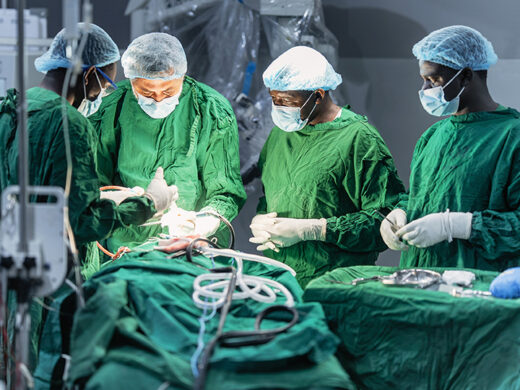
‘For us, the teleconsultation solution is the key to planning treatments precisely – ahead of a trip, for example – and to continuing to monitor patients closely once we’re back in Germany,’ says Dr Kipele. It closes a gap that was once impossible to bridge. Yet the cross-border video link makes more possible than support with acute cases. As Dr Kipele sums up: ‘Through teleconsultation, our colleagues in Tanzania can learn more effectively from Prof Dr Shiban and our senior doctors. This continuous digital exchange enables a training model that will allow neurosurgery in Tanzania to stand on its own two feet in the long term.’
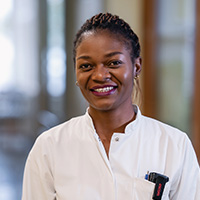
„For us, the teleconsultation solution is the key to planning treatments precisely – ahead of a trip, for example – and to continuing to monitor patients closely once we’re back in Germany.“
Dr Maria Kipele, Specialist in Neurosurgery, Medizinische Universität Lausitz – Carl Thiem
For Prof Dr Shiban, avodaq’s CARY Move has become far more than a tool for projects abroad – it is now an integral part of his everyday work. He regularly joins the daily team meetings from congresses or from home and views patient images in real time. ‘Sometimes it works even better than being there in person.’ He says the same is true of patient care in Lusatia, where telemedicine is already used and evaluated as a matter of routine. ‘Patients are comfortable with it, because what matters most to them is medical expertise – whatever form it takes.’
With this project, the Medizinische Universität Lausitz is demonstrating that cutting-edge technology does more than optimise processes: it can redefine global medical collaboration and knowledge transfer. Meanwhile, Prof Dr Shiban has levelled up on the technology front. He has started using avodaq’s Remote Expert Video Glasses, with which he intends to substantially extend the existing teleconsultation solution in Tanzania. The device gives an unobstructed view of the treatment situation on site and features smart voice control. The plan: ‘I’ll join my colleagues in the operating theatre directly via the glasses and be fully involved, even though there are more than 6,000 kilometres between us.’
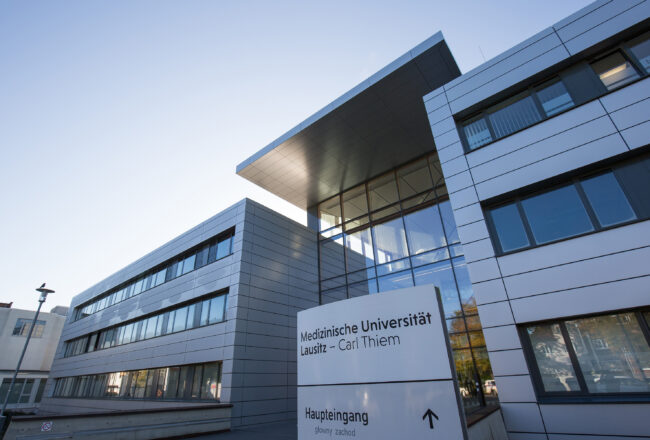
The Medizinische Universität Lausitz – Carl Thiem (MUL – CT) is a young university medical centre and a tertiary care hospital in Brandenburg. Its broad range of specialist disciplines and its focus on modern, patient-centred medicine form the basis for its extensive international work in neurosurgery.