Customer Case Studies
SICK AG: Video Communication and Inventive Spirit

12. May 2026 | 5 min.

12. May 2026 | 5 min.
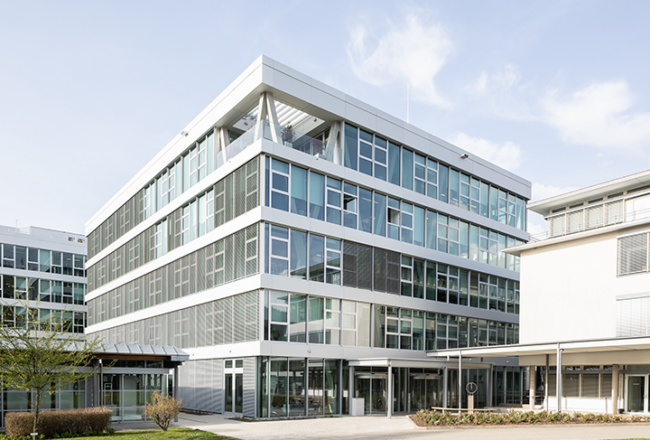
The SICK AG technology group is systematically digitalising and modernising the way its ~12,000 employees worldwide collaborate. The company’s technical focus is on seamless video communication from Cisco, which comes with the highest possible quality of digital services and intuitive, first-rate usability. Added to this are New Work and open space principles to promote flexibility, modernity and efficiency, which are gradually being introduced at SICK’s offices based on a global standard.
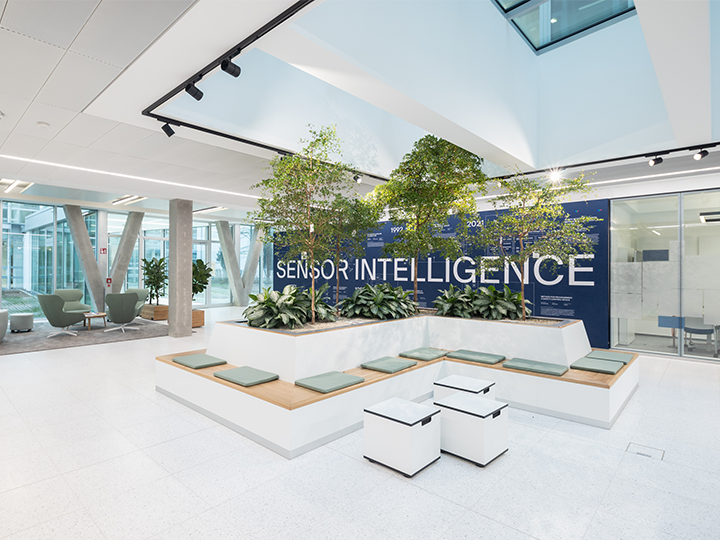
“Building A” was the first to undergo digital transformation: erected in 1977, it is the oldest of SICK AG’s proprietary structures at the company’s headquarters in Waldkirch. After 45 years in service, it has now been replaced with two interconnected cubes that were opened in 2025. They are located at the heart of the main site, directly between the customer service centre, the canteen and other office buildings. Here, the pulse of daily work beats to the rhythm of New Work principles. Workplaces are no longer assigned on a fixed basis and instead, employees can choose their workstation in line with their needs.
Initial feedback after a few months in operation has already been very positive: “The reputation score for Building A’s ground floor was extremely high from the outset”, reports André Lienhard, IT Service Owner Unified Communications at SICK-IT. Part of the reason for this is that employees like to order their midday coffee in the new barista bar on their way back from the canteen, thus ensuring Building A is always busy. Staff are equally pleased with the new offices, says Lienhard. Together with a small team of colleagues, he has spent years ensuring SICK AG stays well-connected through unified communication solutions. “Feedback and occupancy rates alike confirm that the offices are proving extremely popular.”


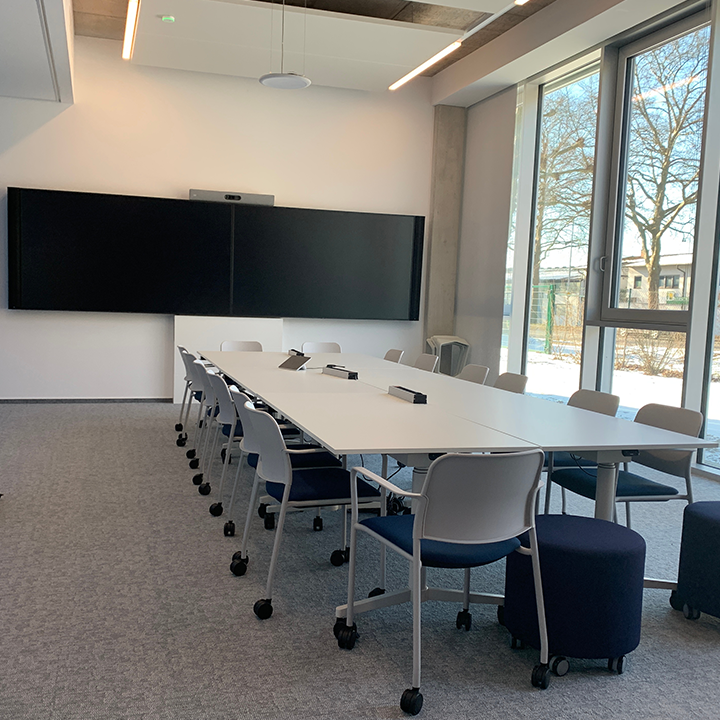

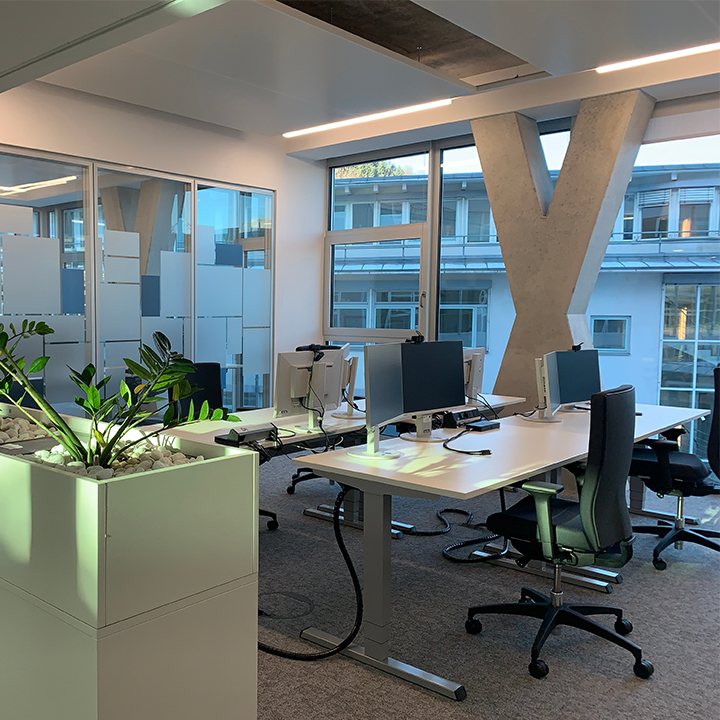
Video communication sits at the heart of digital networking – and at SICK, Cisco is the global partner of choice for this infrastructure. avodaq joined the effort in 2017, since when the collaboration has centred on the SIA Campus global training centre and the technical equipment for offices both at the nearby headquarters and across other countries. Building A served as the pilot project: it offers around 300 screen-based workplaces – running on 600 screens – while a further 450 employees benefit from activity-based working in meeting rooms, the ground-floor marketplace, and other flexible spaces. “We also have event rooms that can accommodate external guests and larger meetings,” says André Lienhard.
Overall, Building A offers around 9,300 square metres of office space with 85 meeting rooms, all equipped with video conference solutions from Cisco and bookable via digital panels. Some rooms can be jointly booked and merged for larger groups. Lienhard explains that when the dividing wall is opened, the digital technology automatically adapts and a second ceiling microphone is connected to the system. “For automation out of the box, we wrote a macro for the video codec.”
According to Lienhard, there were several reasons why SICK chose Cisco as the equipment supplier for all digital meeting rooms worldwide. These included the stability and usability of their solutions as well as the relatively moderate incident rates. He explains further: “We operate a three-level system using the Webex platform with on-site end devices in the hybrid spaces and a module for the phones and the contact centre.” A single-source solution was therefore the most practical choice – both technically and commercially. “If you think the business case through to the end and then also consider the soft facts of the Cisco solution in terms of usability, it offers an excellent solution for a fair price.”
Lienhard already has first-hand experience from digitalising the SICK SIA Campus. “Looking at the high-end rooms in our training centre, fitting them out with other suppliers would have been a considerable challenge.” Every new project equips the team with best practices that feed directly into subsequent digitalisation efforts. For both the SIA Campus and Building A projects, SICK was supported by avodaq and PIK AG as implementation partners for video and media technology.

Right at the top of Building A, SICK has set up a digitalised boardroom that has been designed specially for Supervisory Board meetings. The room is freely available to employees outside these sessions, so that other meetings can take place there. The “Dr. Erwin Sick Loggia”, which is named after the company’s founder, has 24 seats and is fully equipped with Cisco technology for audio and video, including an LED wall that is 135 inches wide. In the adjoining room, interpreter technology has been installed as an optional feature for simultaneous translation, André Lienhard reports.
The boardroom is a prime example of what digitalisation demands. These include building-related topics such as heating and cooling, lighting, facades, mobile walls, and furniture or lowered ceilings. Beyond this, the technical setup requires close coordination with internal building services across a range of communication scenarios – from local and hybrid to analogue media equipment. Even in such cases, Lienhard notes, ventilation and lighting must remain fully operational.
The centrepiece of the lounge is the integrated “cinematic video system” from Cisco, which also includes side-installed cameras. These automatically focus on various speakers and ensure they look their best in the digital broadcast. This all requires a certain amount of time and effort for fine-tuning, which has to be calculated into the project. Lienhard: “Success hinges on establishing standardised approaches to both the planning of building technology and the rollout of all required equipment.”

„avodaq shows a very high level of commitment and dedication, and we are able to work together as equal partners.“
André Lienhard, SICK AG
The new facility was designed to preserve the “spirit of invention” that defined the old Building A. What does that mean?
Lienhard: SICK has technology in its DNA. For me, working in IT, it’s difficult to make a direct contribution to our products. But what I can do is provide the best possible support for employees to ensure they have the highest standard of IT and are in a position to work, communicate and supply outstanding technology solutions to our customers. Everyone on the team is innovative and wants to drive things forward. That’s our objective.
What do you value most about working with avodaq?
Lienhard: avodaq shows a very high level of commitment and dedication, and we are able to work together as equal partners. This cannot always be taken for granted. Over the years, we have also developed a deeply trusting relationship, making it possible to openly discuss all necessary topics. Last but not least, we have a shared understanding of how we can make progress. We are in complete agreement that at SICK, we want to go beyond the mere installation of video communication.
Looking ahead, what is the most significant technical challenge for you and your team?
Lienhard: Firstly, we aim to internationally standardise the company’s video technology to increase operational efficiency and make it easier for our employees to use worldwide. This includes national organisations in countries such as Malaysia or the USA. The second challenge will be to maintain our high level of service and quality for employees. Dealing with issues such as the increasing volume of video installations, rapidly developing technologies (such as AI), and changing solution lifecycles will certainly keep us busy.
„Over the years, a strong cultural alignment has emerged between SICK and avodaq – pragmatic by nature, yet united by a shared ambition for smart, future-ready solutions. André Lienhard's team brings the energy and commitment to translate New Work innovations into tangible results for their colleagues.“
Markus Bachmann, Senior Account Manager avodaq
Contact via LinkedIn
SICK AG is a leading global solutions provider of sensor-based applications for industrial operations. The family-owned company was founded in 1946 and is based in Waldkirch, Breisgau. A technological and market leader, it has operations worldwide with 60 subsidiaries and participating interests, as well as numerous representative offices.


